Embroidery Basics
Demystifying Punching Digitizing: The Art Behind Flawless Embroidery
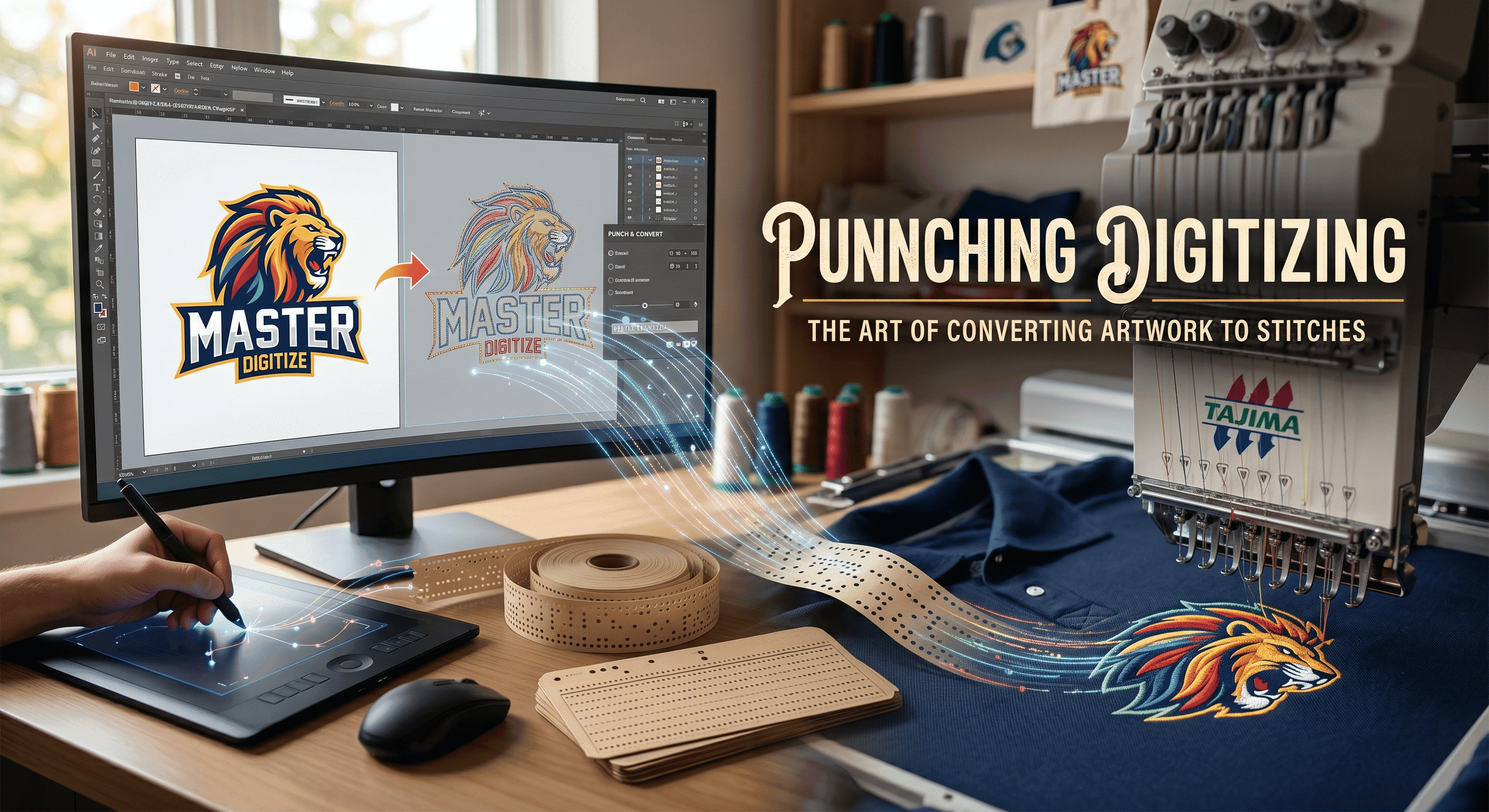
Take a look at the embroidered logo on your favorite polo shirt, company uniform, or baseball cap. The crisp lettering, the vibrant colors, and the textured finish all look effortless. But behind that polished final product lies a fascinating blend of traditional craftsmanship and modern technology known as punching digitizing.
If you are new to the world of custom apparel, you might be wondering: what exactly is punching digitizing, and why is it so crucial for embroidery? Let's dive into the history, the process, and why this unseen art form is the most important step in commercial embroidery.
Why Do We Call It “Punching”?
To understand the term, we have to take a quick trip back in time. Long before computers and software came into the picture, automated embroidery machines (and Jacquard textile looms) were controlled by long, heavy rolls of paper tape.
Highly skilled technicians had to manually map out a design and literally punch holes into these paper tapes. Each hole represented an X and Y coordinate, telling the machine's needle exactly where to move and drop a stitch. The artisan who performed this painstaking task was known as a “puncher.”
Today, the paper tapes are gone, replaced by advanced computer software and digital files. However, the legacy of those early artisans lives on, and the industry still widely refers to the digitizing process as “punching.”
What Is Modern Digitizing?
In today's terms, punching or embroidery digitizing is the process of converting two-dimensional artwork (like a JPEG, PNG, or vector logo) into a specialized, machine-readable digital file (such as .DST, .PES, or .EXP).
This file acts as the “brain” of the embroidery machine, dictating:
- Where the needle should go
- What type of stitch to use
- When to trim the thread
- When to change thread colors
The Digitizing Process: More Than Just a “Click”
A common misconception is that digitizing is as simple as uploading an image into a software program and hitting “convert.” In reality, professional punching is an intricate art form that requires a deep understanding of textiles, machine mechanics, and geometry.
Here is how a professional digitizer brings a design to life:
1. Artwork Analysis and Simplification
The digitizer first evaluates the artwork. Thread is a physical medium, meaning tiny text or incredibly complex gradients that look great on a screen might not translate well to fabric. The digitizer decides which details to emphasize, which to simplify, and how to scale the design for the best result.
2. Pathing (The Roadmap)
Just like planning a road trip, a digitizer must plan the most efficient route for the machine to take. Good pathing minimizes the number of times the machine has to cut the thread and jump to a new area. Efficient pathing saves production time and results in a cleaner, more durable embroidered piece.
3. Assigning Stitch Types
Different parts of a design require different textures. A digitizer essentially “paints” with thread using three primary stitch types:
- Running stitches: a single line of stitches, perfect for fine outlines and tiny details.
- Satin stitches: tightly packed, zigzag stitches that create a smooth, raised surface. These are typically used for borders and lettering.
- Fill (or tatami) stitches: a woven pattern of stitches used to cover large, solid areas of color.
4. Managing Push, Pull, and Density
This is where the true science of digitizing comes in. When a needle repeatedly punches through fabric, it displaces the fibers. This causes the fabric to “push” out in certain directions and “pull” in others.
A skilled digitizer adjusts the file's pull compensation to counteract this distortion. They must also adjust the stitch density based on the specific garment — a stretchy beanie requires a vastly different digitizing approach than a stiff canvas tote bag.
Inspect your digitized design before you stitch
Upload a .dst and preview stitches, colors, and dimensions right in your browser with the free EmbroidAI viewer.
The Value of Professional Punching
While “auto-digitizing” software exists, it cannot account for the physical variables of tension, fabric type, and thread behavior. Poorly digitized files lead to bird-nesting (tangled threads), broken needles, puckered garments, and illegible text.
Investing in high-quality punching digitizing ensures that your designs run smoothly on the machine, saving time, reducing garment waste, and delivering a premium, professional finish every single time.
Frequently Asked Questions
What is punching in embroidery?
Punching is the traditional name for embroidery digitizing — the process of converting artwork into a machine-readable stitch file. The term dates back to when designs were mapped by punching holes into paper tape.
Is punching the same as digitizing?
Yes. Punching and digitizing refer to the same process. Punching is the older industry term, while digitizing describes the modern, software-based workflow.
Can auto-digitizing software replace a professional puncher?
Not reliably. Auto-digitizing cannot account for fabric stretch, thread tension, and pull compensation, so it often produces puckering, broken needles, or illegible text on real garments.
What stitch types are used in digitizing?
The three primary stitch types are running stitches for fine outlines and details, satin stitches for borders and lettering, and fill (or tatami) stitches for large solid areas.
Why does fabric type affect digitizing?
Different fabrics push and pull differently when stitched. A stretchy beanie needs different density and pull compensation than a stiff canvas tote bag, so the digitizing must be tuned to the garment.
Conclusion
Punching digitizing is the unseen craft that stands between a flat logo and a flawless embroidered finish. By blending the legacy of the original paper-tape punchers with modern software, skilled digitizers translate artwork into precise machine instructions — choosing the right stitch types, planning efficient pathing, and compensating for how fabric pushes and pulls.
Whether you run an apparel business or are simply curious about how your favorite embroidered cap was made, understanding punching digitizing reveals the artistry behind every clean, durable stitch.